Am I Really Saved? 3 Questions Jesus Asks to Check Your Faith

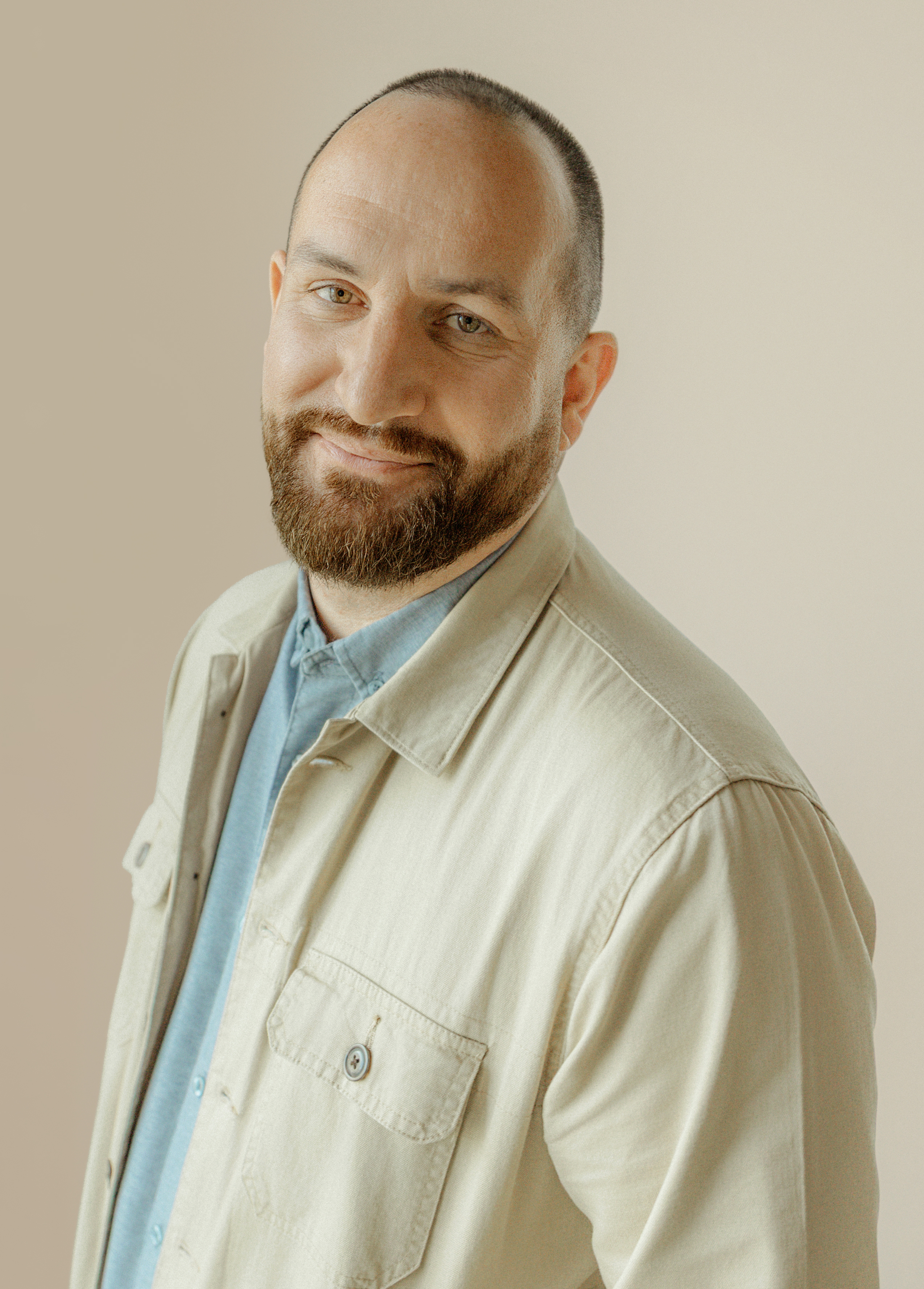
DJay Akers • Discipleship Pastor
June 8, 2026

8 Minute Read

Is Christianity something we talk about, or is it something that transforms us from the inside out? You can have all the right things. You can quote all the right verses. I once knew a man in prison who had memorized the Bible, who could recite any verse you could think of, and yet he lived like the devil. It made me want to ask him, what is wrong with you?

That contradiction is exactly what Jesus confronts in one of the most unsettling passages He ever spoke. It is possible to have eternal language without having eternal life. If you have ever lain awake wondering whether your faith is the real thing or just religious habit, you are asking the question Jesus wanted His followers to ask.


The Scariest Verse in the Bible

In the Sermon on the Mount, Jesus shifts His warning. First He says, beware of false prophets, do not be deceived by others. Then the danger moves closer to home: beware of deceiving yourself. The threat is no longer out there with someone else. It is the possibility that you could be a false disciple without knowing it.

Here is the text. Not everyone who says to Me, "Lord, Lord," will enter the kingdom of heaven, but the one who does the will of My Father who is in heaven (Matthew 7:21). I have said before that I have never met anyone with Matthew 7:21-23 tattooed on their arm. My wife has taken me to Hobby Lobby plenty of times, and I have never seen this one hanging on the wall. No church picks it as the verse of the year. Yet I believe these are the heaviest verses in the entire Sermon on the Mount.

Notice who Jesus is talking to. He is not addressing skeptics, atheists, agnostics, or people who hate God. How do we know? Because these people call Him Lord, Lord. Throughout Scripture, when a name is doubled, there is passion and intensity behind it: Samuel, Samuel; Abraham, Abraham; Martha, Martha, when Mary sat at His feet while her sister cleaned the house in a frenzy. The doubled Lord, Lord carries that same emotional weight.

These are religious people. Church people. People who know spiritual things, who use spiritual language, who sing the songs and say amen at the end. That is what makes this passage so terrifying. There are people who are convinced everything is fine between them and God, and they are deceived. So let me offer three questions to help us examine ourselves.

Life or Lips: Is Your Faith Real or Just Talk?

The first question is simple. Life or lips? These people are saying Lord, Lord out loud, which tells us something important. Their faith was public, not private. If you tell me you have a private faith, I would gently push back: there is no such thing. Faith is deeply personal, but it is never private. It is a public confession.

Young people, hear this next part especially. God does not have grandchildren. He only has children. You cannot ride in on someone else's relationship. You have to come on your own. You need your own baptism moment, your own public confession, your own spot where you declare Jesus as Lord and are born again. It is not what your parents did or what someone else did. It is what you do with your own faith.

There is a verse that goes right alongside this. If you confess with your mouth that Jesus is Lord and believe in your heart that God raised Him from the dead, you will be saved (Romans 10:9). You have to speak it. You cannot hold it as a secret. But Paul does not stop at the mouth. Something also has to happen in the heart. That is exactly what Jesus is exposing. You can confess something with your lips, but if it never drops two feet down into your heart, it is probably not real. It is a religious thing, not a living thing.

So the question stands. Is your Christianity something you talk about, or something that transforms you from the inside out? This is why God says throughout the Old Testament that He is not after your animal sacrifices or your religious festivals. He wants your heart. A transformed heart leads to a transformed life. It is heart transformation, not behavior modification. God is never impressed with empty religion. He calls it whitewashed tombs and dead men's bones. What He wants is a relationship.


Religion or Relationship: What Are You Bringing to Jesus?

That leads to the second question. Religion or relationship? Look at verse 22: on that day, many will say to Me. Pause on that word many. Last week we saw that many are on the broad road. Now we hear that many will say Lord, Lord. So there are many people on the broad road who are convinced they are on the narrow one. That tension should sober us.

Watch what they bring to Jesus. Lord, Lord, did we not prophesy in Your name, and cast out demons in Your name, and do many mighty works in Your name? When we see people like this, we tend to think they must be men and women of God. They read Scripture from the stage. They share an impressive insight in small group. But notice what they present to Jesus: not their surrender, not their faith, not their obedience, not their trust. They bring a list. And religion loves a list.

For us today, that list might sound like this. Lord, I went to church. I did my devotions. I posted a Bible verse on Instagram. I set up my tithing. I served in kids ministry once this month. I made it to small group a couple of times. Check, check, check. We can stack up accolades, but the gospel goes deeper than that. Jesus is not asking for your activity. He is asking for your heart. We are not saved by works. We are saved by faith.


How a Marriage Explains the Difference

In a couple of months, my wife Amy and I will celebrate 23 years of marriage. She is the hero of our story, not me. But I will be honest about something. When I asked her to marry me, I had no clue what I was doing. I was 22, my brain was not fully developed, and I barely knew her. I saw a good thing and I knew enough to grab it, but I did not really understand what marriage meant. I said I do, she said I do, and we received our titles: husband and wife.

Here is the truth I love telling. I love that woman more today than the day I married her, and I loved her deeply on that day. My hope is that when people see me, they catch a glimpse of her, and when they see her, they catch a glimpse of me.

I want the same thing said about Jesus. I want to love Him more today than the day I first got on my knees and surrendered to Him. And I want people to see Him when they see me. Because here is the point. You can have all the titles. You can have the marriage certificate, the house, the cars, the family photos, the anniversary posts, and still have a dead marriage with no real relationship. Why? A title does not create intimacy. A relationship does. Intimacy is built by knowing each other over years, sacrificing for one another, covering each other with grace, being patient, and seeing God work over time.

That is what Jesus is getting at. You can have all the right words and all the religious activity and still miss Him entirely. He never signed us up for a religious arrangement. He signed us up for a passionate, living relationship. It is the very reason He died for sinners, to bring us into a relationship with God and make us one with Him.


How Do I Know If I'm Really Saved?

If these questions stir something uneasy in you, that is not a reason for despair. It is an invitation. The fact that you care whether your faith is real is itself a hopeful sign that God is at work in your heart. The people Jesus warns about were not worried at all. They were confident right up until the end.

So ask yourself honestly. Life or lips: has your confession dropped from your mouth down into your heart, or is it only language? Religion or relationship: are you bringing Jesus a list of accomplishments, or are you bringing Him yourself? You do not have to bring a perfect record. You only have to bring your heart, surrendered and His.

That is where real life begins. Not in saying the right words or checking the right boxes, but in knowing and being known by the One who gave Himself for you. If you have never made that personal, public confession, today is the day to stop talking about Jesus and start belonging to Him.


Up Next
From this Collection: Blog
July 20, 2026 • 8 Minute Read
How to Trust God With an Uncertain Future
Most of us spend a good deal of energy trying to remove uncertainty from our lives. We script the vacation, plan out the next few years, get detailed about as many things as we can, and quietly hope nothing catches us off guard. Certainty feels like safety. So it may sound strange to hear someone say they have no desire to live a life without uncertainty. But that is exactly what learning to trust God with an uncertain future has taught me. A life without uncertainty is a life that would not require faith. And a life of faith, as much of it as I can live, is simply a better life. When you look closely at Abraham, you see this at work. Abraham embraces uncertainty, while fear, by its very nature, tries to remove it. echo through the entire chapter for a reason worth understanding. Faith Embraces Uncertainty. Fear Tries to Remove It. Here is the difference in a single line. Faith embraces uncertainty. Fear attempts to remove it. When God called Abraham to leave everything familiar and go, Abraham went, even though he did not know exactly how it would unfold. I want you to hear this from me: I do not want to live a life without uncertainty. That might sound a little funny at first. But a life scrubbed clean of the unknown would be a life with no room left for faith. There are some things I would honestly rather not know. I do not need to know what tomorrow brings. That is a hard thing to sit with, and some of you are reading this thinking, "You don't understand. I script my vacations." Is It Wrong to Want a Plan? No. There is a real difference between being a person who likes to be prepared and being a person who is trying to eliminate uncertainty altogether. Preparation is good. I work hard on a message before I ever stand up to preach it. And yet there is a part of me every single week that says, "Lord, I don't know exactly how this is going to go. I just have to trust that it will be what You want it to be." I can prepare all I want, and there is still an element of faith. I never want to remove that. I just want to keep trusting God with the outcome. What Happens When You Stop Scripting Everything Years ago I ran into a man I deeply admired, Dr. Jack Hayford, who has since gone to be with the Lord. He pastored a church called Church on the Way in Van Nuys, California, a bilingual, deeply evangelistic church that grew to something like eight to ten thousand people. He was known as a man of tremendous integrity. The first two years of my Bible college were actually through his school, one of the original online programs for Christian students, and it was what I had available to me at the time. I got the chance to meet him and be shown around a little. We were making small talk, and he asked where I was from. I told him Michigan, and that my dad lives in Cadillac. He said, "Oh, I've been there." I could not figure out how a man in California had been to Cadillac, Michigan, so I asked him. That is when he told me how he and his wife vacation now that he is close to retirement. They pack bags with versatile clothing, drive to the airport, look up at the board, and decide where to go based on whatever the next flight happens to be. One of those flights had carried him into Grand Rapids, and he drove north until he landed in my hometown. Some of you read that, and it makes you shake. You are thinking, "I do not want a vacation like that." This is not about getting you to travel differently. What I want you to see is that there is something exciting you get invited into when you embrace uncertainty. When you can say, "We do not know exactly how this will work out, but we know we have heard from the Lord to obey Him," it becomes exciting, because you get to watch Him do something only He can do. The Best Decision We Ever Made This is how God has worked in my own life. When my wife and I were in our early 30s, we began to feel like God was bringing our story in Michigan to a close. It was where we were from, where we had lived our whole lives, where I had pastored for about twelve years. I just knew it was not there anymore. God had made that clear through a variety of means: His Word, other people, and our own prayer time. It was time to go. Some people I trusted sat us down and made sure I understood what I was leaving. They said, "You are at a church with its own Christian school. You have two boys, two and four. You can raise them in a wonderful Christian school, probably for free. Your wife is a teacher, and they will give her a job. You have earned all this trust and credibility over ten years. Why would you leave that?" Then they asked, "Do you even know where you are going to live in Florida?" We did not. We were going to stay temporarily at a pastor's empty house. "Do you know where your kids will go to school?" No. "Do you know where your wife will work?" No. "What are you thinking?" I said, "I think God's got it." They said that seemed irresponsible. I said, "It's called faith." I have come to believe that if we have a few fill-in-the-blank questions left in our lives, He likes to fill them in Himself, and then He likes to get the glory and the credit for it. To live a life where He gets the glory is a better life. It is not about what I was able to pull off. When God says go, we go. We were young. We were basically kids, a little family that jumped into a 1998 Chevy Malibu convinced it would make it to Florida. It did not. It broke down in Valdosta, Georgia. Our boys, Max and Malachi, were so small then. On our very first Sunday, Max had a total meltdown and could not be brought up on stage, but little Malachi was there, and God started something that day. When I look back, I can only say that He wrote a better story than I would have. He wrote a better story than I would have, and I am confident He is still doing that. Is the Center of God's Will Really the Safest Place? My wife and I have tried our whole lives, because of the people who discipled us, to stay in the center of God's will. But one of the great lies that gets caught more than it gets taught in the church is the phrase, "The safest place is in the center of God's will." Let me step right on that. The safest place is not the center of God's will. Hear me carefully. It is the most fulfilling place. It is the right place. But it is not the safest place. When God called Abraham from Haran to Canaan in Genesis 12, He was not calling him into safety. He was calling him into faith. We get so obsessed with keeping everything as safe as possible, wanting every part of life secured and settled. God has not called us to live safe lives. Faithful, Not Fearless Did Abraham still struggle with fear? Of course. When he stepped into new territory, he was the one who said, "Let's tell them you are my sister." He was not a fearless man. But he was a faithful one. In the big moments, when God said get up and leave, he got up and left everything he knew and every connection he had. That is the invitation, and it comes with a cost. You do not get to experience the benefits of faith without paying the price of obedience. Trusting God with an uncertain future will not guarantee that everything will feel safe. What it offers is better than safe. It is the chance to watch God write a story you never could have written on your own, if you are willing to get up and go when He says go.
July 13, 2026 • 8 Minute Read
How to Trust God When You Can't See What He's Doing
Some seasons of following God ask you to move before you can see where you are going. You sense Him leading, but the outcome is invisible, the timeline is unclear, and everyone around you seems to be asking how you can be so sure. Learning how to trust God when you can't see what He is doing is not a lesson reserved for spiritual professionals. It is the ordinary work of faith, and Scripture hands us an ordinary man to show us how it is done. In Hebrews 11:7, the writer holds up Noah: "By faith Noah, being warned by God about things not yet seen." Those first two words, "by faith," echo through the entire chapter for a reason worth understanding. What Does It Mean to Have Faith? At its root, faith is implicit trust in the character and nature of God. That phrase repeats over and over in Hebrews 11, and the repetition is deliberate. The writer is speaking to the early church, a suffering and struggling people, and he is working to build their faith. To trust God's character is to trust two things about Him: His goodness and His power. We trust that God is genuinely good, exactly the way He explains Himself, and that He is powerful enough to do what He said He would do. How do we know He is good? The cross. It is the most powerful demonstration of love, kindness, and goodness in the history of the world. How do we know He is powerful? The empty tomb, because He is the only One who has ever defeated sin and death like that. He is good because of the cross. He is powerful because of the empty tomb. If you hold onto nothing else, hold onto that. Faith Is Believing God Will Do What He Said Essentially, faith is believing that God will do what He said He will do. When you read "by faith" stamped over Noah's life, you are reading a man saying, "I believe God will do what He said He will do." I have an uncle who was a pastor, and one year he served as my camp counselor. I was around fifteen, and he taught a series of devotionals I have never forgotten. That very line came straight from him: faith is believing that God will do what He said He will do. Then he added a second step. Faith is also believing that God is good, and that He will do what He said He will do for you. It is not merely a broad, blanket statement for everyone. It is true of you, individually. That still builds my faith today. When God's Character Is Hard to Understand God warns Noah that something is coming. In Genesis 6:13, He says, "The end of humanity has come before me, for the earth is filled with violence," and He instructs Noah to build an ark of gopher wood. Yet in the same warning, He makes a promise, telling Noah in Genesis 6:18, "I will establish my covenant with you." This is where some of us have to wrestle honestly. We serve a loving God who looks at humanity, sees it overcome with violence, and chooses to end all but one family and start over. That is a difficult thing to sit with. Some have looked at God and called Him a murderer, even accused Him of genocide. If that makes you uncomfortable, the discomfort is worth facing rather than smoothing over. Why should it feel good to learn that humankind had become so corrupt that violence was an everyday practice everywhere you looked? What it really meant was that the iron rule was in effect. Whoever was most powerful took whatever they wanted from whoever they could, all the time and everywhere. The Golden Rule was being practiced nowhere. People were not doing to others as they would have others do to them. So what part of God's character do we see here? We see God as a judge. In our culture, when a judge sentences someone to prison, we do not call the judge an abuser. When a judge hands down even the hardest sentence, we generally understand the judgment as fitting the crime. God, our Creator and the Judge of all things, is saying the punishment fits the crime, and we have to trust Him with that even when it is hard to see. He will judge every one of us; He will judge the nations, and His judgment is perfect and right. That same judgment is also what spares Noah and his family. Faith in Things Not Yet Seen Here is where the story becomes genuinely interesting. Hebrews 11:7 says Noah was warned "about things not yet seen." In Genesis 6:17, God declares, "I myself am bringing the flood of water upon the earth." There had never been a worldwide event like this. Noah is being warned about something he has no concept of. He does not fully understand it; he does not even know how it will happen; he simply knows it is coming because God has told him. The writer of Hebrews includes Noah to remind us of one thing: our faith is not in what we see; it is in who we know. Noah is a wonderful example of an ordinary person who put his faith in an extraordinary God. His posture was simple. "I can't fully understand what is going to happen, I can't see it, I have never experienced it before, but if You said it, I believe it. I'll take You at Your word." That is exactly how the chapter opens. Hebrews 11:1 says, "Now faith is the certainty of things hoped for, a proof of things not seen." To be a follower of Jesus, to be His disciple, means believing not only in the supernatural but in the invisible. That is difficult for our culture, and for skeptics to accept. How to Trust God When You Can't See Him Working Every day I pray to the Lord whom I cannot see. I surrender my life again; I lay it down before Him, and I pick up the cross He has given me in order to follow Jesus, a man I have never met. I see God's activity around my life. I believe I have a personal relationship with Jesus through the Holy Spirit, and that He speaks to me. But these are invisible things. It is by faith that we read the Word, by faith that we pray, and by faith that we trust the Holy Spirit is speaking to us and through us. Living that kind of life is awesome. You will find yourself saying things to other people and wondering whether the Holy Spirit just spoke through you, because you know you are not that smart or that good on your own. You will hold faith in moments when others cannot understand how you have any peace at all. The reason is simple. Something invisible is at work inside you. They cannot see it, but you can feel it, understand it, and know it. It is all an act of faith. Paul says the same thing while writing about death. In 2 Corinthians 5:6-8, he writes that we are "always of good courage," that "we walk by faith, not by sight," and that he would prefer to be absent from the body and at home with the Lord. Think of Enoch, a man who walked with God and then was simply with God, with no record that he ever died. Do you think that took courage? I have to imagine it took real faith. It is hard to picture the conversation where God says, in effect, "Enoch, your time is done, why not come spend time with Me here, since we already spend so much time together," and Enoch simply answers, "Okay." Most of us would freeze at "right now." But Enoch trusted God, even in the face of death. Faith in Who You Know Noah had faith in things he could not see. So did Enoch. So can you. The invitation of Hebrews 11 is not to manufacture certainty about outcomes you can predict and control. It is to anchor your trust in the character of the God who is speaking to you. He is good, proven at the cross. He is powerful, proven at the empty tomb. And He is good to you, individually, not just to everyone in general. When you cannot see what God is doing, remember that your faith was never meant to rest on what you can see. It rests on who you know. That is what turned an ordinary man like Noah into such a beautiful picture of faith, and it is what can steady you the next time God asks you to trust Him before the outcome is ever in view.
July 6, 2026 • 7 Minute Read
How to Walk With God: What Enoch's 300 Years Teach Us
Most of us want to be close to God. We want a faith that feels real, steady, and alive. Yet if we are honest, our walk with God is often not what we want it to be. It starts strong and then stalls. It shows up on the good days and quietly disappears on the hard ones. Long before us, a man named Enoch showed a different way. Scripture says he walked with God for 300 years (Genesis 5:22). Not for a season, and not only when it was convenient, but day after day for three centuries. His life answers a question many of us are quietly asking: what does it really mean to walk with God? The answer begins with the foundation of his faith, found in Hebrews 11:6: "without faith it is impossible to please Him, for he who comes to God must believe that He is, and that He is a rewarder of those who seek Him." The Foundation: A Faith That Pleases God Enoch's faith, and ours, begins with a simple recognition: real faith is God-centered rather than self-centered. There is nothing good within me that can earn God's favor or please Him. I cannot outgive Him. I cannot become holier than Him, because He is God and I am not. So faith starts by admitting that it is about God and what pleases Him, not about me and what I want. Faith Believes That God Is Real Faith also acknowledges that God actually exists. The people of Enoch's day were not much different from people today. Many did not believe in the Creator God. They ignored the spoken witness of Adam and his sons, Seth and Enoch, and their descendants, and they ignored the witness of creation itself. As Psalm 19:1 says, "the heavens declare the glory of God, and the skies proclaim the work of His hands." Despite the evidence, many rejected the Creator outright, or they tried to reduce Him to an idol they could grasp and control. That denial led them to believe they could live however they pleased, with no thought of judgment or consequence. This is why sin always thrives wherever God's existence is rejected. Faith Believes God Rewards Those Who Seek Him Believing that God exists, however, is not enough for a relationship with Him. James 2:19 reminds us that "even the demons believe and tremble." A faith that pleases God must also believe that He rewards those who seek Him. We do not seek God in order to collect rewards. But as we seek to know Him, we begin to see that He is holy and I am not. We see that the sin in my life has created a separation, a gap between God and me that I cannot bridge on my own. And as we keep seeking, we discover that God loved the world so much that He built the bridge Himself. That bridge was built on the life, death, and resurrection of Jesus. When we diligently seek God the Father, He leads us to Jesus every time. This is why Scripture, in both the Old and New Testaments, calls us to actively seek God. Jeremiah 29:13 promises, "You will seek Me and find Me when you seek Me with all your heart." Matthew 6:33 adds, "but seek first the kingdom of God and His righteousness, and all these things will be added to you." Faith is belief in action, and that action is seeking God. What Does God Reward Us With? So what are the rewards Hebrews 11 points to? Simply this: everything God could give for your good is yours. Being made right, counted sinless in God's eyes through faith in what Christ has done, is one reward. But He gives so much more. He gives forgiveness, a new heart, the Holy Spirit, eternal life, blessing, mercy, grace, peace, joy, love, and heaven itself. Everything that is for our good, He gives. That is the foundation of a faith that pleases God: believing that He is, and that if you seek Him, you will find Him. It was the foundation of faith for Enoch, and it is the foundation for you and me. What Does a Walk With God Actually Look Like? If that is the foundation, what did Enoch's faith look like in practice? His life reveals two clear marks of a walk with God. A Walk With God Is Consistent Enoch did not walk with God for a little while. He walked with God for 300 years. I have been trying to walk with God for about forty years, and Enoch's three centuries put that in perspective. His was a walk of day after day, moment by moment, a deep and steady connection with God the Father. A consistent walk has to be intentional because no one falls into good habits by accident. It takes intention and effort. Are you intentional about reading your Bible? About attending services regularly? About serving, about your generosity, about praying? This is not meant to produce guilt. It is meant to help you see clearly that you cannot walk with God while you wait until you feel like it, because that day rarely comes. Enoch did not walk with God only when he had nothing else to do, only when he was having a good day, or only when he felt like going for a walk. His walk was consistent because it was intentional, something he put real effort into. A Walk With God Is Relational A walk of faith is not only consistent, but it is also relational. Let us be honest: many of us are not very good at relationships. We struggle to build deep bonds with others, often because we fear rejection or getting hurt. Here is the good news. God already knows how messed up you are, and He loves you anyway. You do not have to hide anything from Him, because He already knows. You can be honest with Him and share your deepest struggles, your darkest fears, and even your doubts. You can also share your joys. The Creator of the universe takes pleasure in you. He wants to take walks with you every day. He wants to hear everything you are learning about Him, and He wants to teach you more about Himself than you have ever dreamed of knowing. Enoch walked with God because he loved God more than anything else. So if your walk with God is not what you want it to be, stop and ask what is getting in the way. What do I love more than God? Some of us love sleep more than God. Some love money, some love pleasure, and some of us love ourselves more than we love God. Are You Walking With God, or Asking Him to Follow You? That question cuts to the heart of it: am I walking with God, or am I simply asking Him to follow me? Enoch's consistent, intentional, and relational walk pleased God the Father and was evident to everyone around him. The same walk is open to you. It rests on the faith that He is real and that He rewards those who seek Him, and it grows through a daily, honest relationship with the God who already knows you and still loves you. He built the bridge to close the gap through Jesus. The invitation now is not to ask God to follow your life, but to begin walking with Him, one intentional and honest day at a time.
June 29, 2026 • 7 Minute Read
What Is Faith? Why It's Only as Good as What You Trust
Some Sundays are tough on the heart. This one is tough on the mind. Working through what faith actually means takes a little mental gymnastics, so let's take the cookies off the top shelf and put them where everyone can reach them. The whole study rests on one verse: "Now faith is the assurance of things hoped for, the conviction of things not seen" (Hebrews 11:1). Notice what the writer is doing here. He is not handing us a tidy dictionary definition. He is describing what faith actually does. Faith gives substance to God's promises. What Is Faith According to Hebrews 11? Start with that first phrase: faith is the assurance of things hoped for. The word assurance is rich. Some scholars translate it as confidence, others as certainty. The Greek carries the idea of substance, something solid, something you can stand on. There is a story that captures this perfectly. A Scottish missionary named John G. Paton went to the New Hebrides, a chain of islands in the South Pacific, to translate the book of John and preach the gospel. He hit a wall trying to render one word into the native language: faith. He could not find a word for belief or trust. One day, he was sitting with the local man, who was helping him translate. He sat down in a chair and asked, "What am I doing?" The man answered, "You sit in a chair." Then he leaned back, balancing on two legs, and asked again, "What am I doing?" This time the man gave him a different word entirely: "You are leaning your whole weight upon it." That was it. That was the word he had been searching for. So when he translated John 3:16, it read, "For God so loved the world that He gave His only begotten Son, that whoever leans his whole weight upon Him will not perish but have everlasting life." That is the essence of faith. Faith is not merely believing a chair exists. It is putting your whole weight on it. In the same way, faith is not merely the collection of head knowledge about Jesus. It is placing your entire life on Him: your fears, your anxieties, your worries, and your eternity. Is Biblical Hope the Same as Wishful Thinking? When most of us hear the word hope, we think of something uncertain. I really hope my team wins the Super Bowl. I hope the weather cooperates. I hope this works out. As a lifelong fan of a team that rarely cooperates, I have done plenty of wishful thinking over the years. But that is not biblical hope. That is just wishful thinking dressed up. Biblical hope is confidence rooted in God's promises. Christian hope is not "I hope God keeps His promises." Christian hope says, "God has promised, therefore I know He will." This is where faith and hope link together. Faith grabs hold of hope, and hope grabs hold of God's promises. That is exactly the pattern running through Hebrews 11. Noah built an ark when it had never rained. Abraham left his home with no idea where he was going. Faith says, "I do not have it yet. I cannot touch it yet. I do not even fully understand it yet. But God, You spoke it, and I am putting my full weight on that." So the focus of the verse is not on hope itself. The focus is on the faith that grabs hold of what God has promised. Picture receiving a notice today that a three-million-dollar inheritance is now in your name. The money has not hit your account yet, but you know it is coming. Does that change anything for you? Of course it does. The promise changes the present. Faith works the same way. God promises things that reshape our present circumstances, because we trust His future. Does the Strength of My Faith Matter? This runs consistently through the New Testament. Faith is never about your self-confidence. It is confidence in God. It is taking God at His Word and placing your full weight on His promise. Faith says, "God, I trust You even when I cannot see the outcome." And no, the outcome is usually not visible. That leads to the second half of the verse. Faith is not only the assurance of things hoped for. It is also the conviction of things not seen. The King James Version calls it the evidence of things not seen. The New American Standard calls it the proof of things not seen. They all capture the same idea. Faith is not limited to what we can see with our eyes. Faith sees a larger reality. It does not deny what is visible. It simply believes there is more to the picture than the surface. For a believer, there are invisible realities: God, the Holy Spirit, angels, heaven, the kingdom of God, and eternity. Faith believes God's testimony about all of it. I quote Tim Keller almost every time I teach, because he was a great mind, and he often pointed out that everyone interprets reality through a lens. Everyone is trusting something. Everyone has faith in something, whether it is money, success, science, politics, relationships, or career. The question is never whether you have faith. The question is what you have placed your faith in. Here is where it gets a little tricky. Faith is only as good as its object. You can have enormous faith in very thin ice and still drown. You can have trembling, weak faith in very thick ice and be completely safe. The issue is not the strength of your faith. It is the object you put your faith in. And God has proven Himself trustworthy and faithful again and again. What Does 2 Kings 6 Teach About Faith? Faith understands that more is happening than what we see on the surface. One of the clearest pictures of this is in 2 Kings 6, with the prophet Elisha and the Syrian army. Every time the Syrian army moved out, Israel already knew. The troops would shift, and Israel was ready. The Syrian king grew furious and gathered his commanders, demanding to know who was leaking information. One of his generals stepped up and said, in effect, "It is none of us, my lord. There is a prophet in Israel named Elisha, and he knows what you are going to do before you do it." The king's response was simple: go get him. So the army found where Elisha was staying and surrounded the entire city with troops, chariots, and horses. The next morning, Elisha's servant walked outside the tent, saw the army, and panicked. He ran back inside. "Master, master, what are we going to do?" He was looking only at the facts. He was looking at his reality, at what he could see. And Elisha answered him, "Do not be afraid, for those who are with us are more than those who are against us." Put yourself in that servant's sandals. You look at Elisha, then out at the army, then back at Elisha. The math does not add up. It is two against a hundred thousand. So Elisha prayed, "Lord, open his eyes so he can see." And suddenly the servant saw what had been there the entire time. The hills were full of horses and chariots of fire surrounding the Syrian army. Heaven's angels had been present all along. Where to Go From Here That is the heart of biblical faith. It leans its whole weight on God. It treats His promises as solid ground rather than wishful thinking. It trusts the One who has proven Himself faithful, even when the math does not add up and the outcome is not yet visible. Your faith does not have to be enormous to be real. It only has to rest on the right object. The servant's eyes were eventually opened, but the chariots of fire were there before he ever saw them. God's reality does not depend on your ability to see it. So the question to carry with you is not how strong your faith feels today. It is where you are leaning your whole weight.
June 15, 2026 • 6 Minute Read
How to Be a Present Father: The One Habit That Shapes Your Kids
Most dads believe that being in the house counts as being there. You come home, you settle in, and you tell yourself the kids know you love them. But there is a difference between being home and being present, and your children feel it long before they can name it. The good news is that the gap is closing. Back around 1965, fathers were spending roughly 2.5 hours per week with their children. By the early 2000s, that number had climbed to about 6.8 hours, nearly tripling. Today, millennials and Gen Zers just stepping into fatherhood spend around 7.8 hours per week with their kids on what is measured as childcare activities. It does not mean they are playing a game during every one of those hours, but it does mean they are with them. For all the complaints older generations love to lodge against the younger ones, something about the next generation is getting fatherhood right. Presence is a big deal. Presence has impact. What Does It Mean to Be a Present Father? A present father is one whose nearness has weight in the home. The world has changed since 1965, and values have changed even more, but the truth beneath it all has not moved: when you are there, it changes your child. This is the first characteristic of a shepherding dad, and it is woven straight through Psalm 23. You see it in verse two, where He lets me lie down in green pastures and leads me beside still waters. You see it in verse four, where even though I walk through the valley of the shadow of death, I will fear no evil. The reason given is not a strategy or a technique. It is a presence: for You are with me. The Lord shepherds by being with His sheep, and that is the model handed to every father. Presence Has Impact There is a video circulating on social media that captures this with painful clarity. A mother set up an experiment with her three pre-teen children, two boys and a girl, alongside their father. She lined all four of them against a wall and read out a series of prompts, asking them to step forward if a statement was true of their experience. The exercise drew a sharp contrast between the way these children were being raised, with a father present in their lives, and the way that same father had been raised without one. At the end, she turned to her husband and said, "Thank you, honey, for breaking the cycle." Here was a man who had grown up without a present father, and that absence did not become his inheritance to pass down. He chose to be present anyway. That is the heart of it. The cycle you were handed is not the cycle you are required to repeat. The Difference Between Being Home and Being Present I grew up with what I believe was a very present father. But years later, he noticed something about my parenting that he had never seen in his own, and it caught me completely off guard. When my kids were small, around one and three, my dad came down from Cadillac, Michigan, to visit us in the lower part of the state. He was in town for a conference and spent close to a week with us. During that visit, he noticed a difference between his fathering and mine, and when he told me about it, it shocked me because, in my memory, he had always simply been there. In his own words, what caught his attention was this: "When Ben got home, he was home. He wasn't doing other things. He was home with his family." He went on to describe his own younger years honestly. He was a bivocational pastor, commuting 70 miles each way to Lansing, and he thought he was a great ballplayer, so he played on three separate softball teams. "I always had stuff that I thought was really important for me to do when I got home, whenever that was," he said. "Ben would get home, and they did stuff together. They played games together. It was a fun time, something for the kids to look forward to. And I just always remembered having something I needed to do." Here is what struck me. What I was doing with my kids when I got home was simply what I most enjoyed doing with them. I did not know there was a difference in volume. My dad saw a shift in volume that I could not see in myself. That is how presence works. It is rarely about a single dramatic decision. It is about where your attention goes in the ordinary hours after you walk through the door. How Do You Stay Present With Teenagers? If small children feel your presence, teenagers test it. My dad has become even more intentional as a grandfather, and two of his granddaughters, my nieces Ava and Jenna, twins now 15, show what that looks like. His conviction is simple: "Grandparenting is an opportunity to make the most important thing the most important thing." Once a month, his school district holds a late-start Monday, and on those mornings, he takes the girls out for breakfast. When they first started going, the girls were buried in their phones. So he set a boundary: "If I'm paying for breakfast, you're going to be with me, because wherever you are, be there." That single boundary changed everything. Granddaughters who, like most teenagers, do not always let you in began to open up. They told him about their lives and what mattered to them. As he put it, "It has connected us in a way that is really, really powerful." Presence with teenagers does not require a grand gesture. It requires showing up consistently and refusing to let the screen win the table. Presence Requires Intentionality None of this happens by accident. Presence requires great intentionality, whether you are a young father with toddlers, a worn-out dad commuting home in the dark, or a grandfather trying to reach teenagers who would rather scroll. The 2.5 hours that became 7.8 hours did not climb on their own. Fathers decided their children were worth the volume. If you take only one thing with you, take this: when you are with your family, be with your family. You can be in the same room and still be somewhere else entirely. You can also be the one who breaks a cycle of absence that goes back generations, simply by choosing to be home when you are home. The Shepherd leads His sheep by being with them. Lead yours the same way.
June 15, 2026 • 8 Minute Read
What Are You Building Your Life On? The Question Behind a Sinking Skyscraper
Jesus ended His most famous sermon with a story, and He did it on purpose. Stories stick in the brain in a way that lists of principles never do. So after teaching everything in the Sermon on the Mount, He gave His listeners a picture they would carry home: two builders, two houses, two foundations, and one storm that revealed the difference. The question that picture forces is simple and unavoidable. What are you building your life on? This is the parable of the wise and foolish builders, and it is not a fairy tale. Jesus was teaching a real audience, sitting in a real place, at a real point in history. You can walk around the Sea of Galilee today and stand near where He likely gave this message. That matters, because His parables are rooted in the everyday world of the people listening, yet the truth inside them applies to every life in every century, including yours. How a Parable Actually Works A parable is a fictional story that carries a heavenly truth. It comes out of Jewish culture, where rabbis used these stories as a primary teaching device, and Jesus was a rabbi. What makes His parables distinct is that they are grounded in the context of His day while the principles inside them remain universally applicable. Once we understand what a story meant to its first hearers, we can take its truth and apply it to our own lives. Parables also run on symbolism. As the story unfolds, you are meant to assign meaning to the characters and details. In this one, four symbols do the heavy lifting. The builders represent us, you and me. After teaching all those remarkable things, Jesus is handing His listeners an invitation: you are going to build, and you will build either wisely or foolishly. The wise builder responds with faith and obedience. The foolish builder chooses to build life on his own terms. The house represents the life you build. When most of us think about the life we have built, our minds go first to our children, our home, our car, our occupation. That is part of it. But Jesus is pointing at something deeper. The life you build includes who you have become. It includes your soul, your mind, and your heart, the seat of your emotions. You have a great deal of say in how that gets built, based on the decisions you make. The foundation is the third symbol, and here the two builders finally diverge. Up to this point they are identical. The foundation represents the decisions we make in life. You could say the foundation is the teachings of Jesus or the principles of Scripture, and that is true, but only because you have to decide what you want your foundation to be made of. It can be built from the Word of God. It can be built from the teachings of Jesus. Either way, it is a decision that you make, and that decision becomes the foundation everything else rests on. The storm is the fourth symbol. In Scripture, storms represent God's judgment. This passage can fairly be read as adversity too, since we have all weathered hard seasons that tested the integrity of what we had built. But the meaning most scholars reach for first is judgment, and judgment in Scripture is God's testing and examining of us. The foundation you have built your life on will be inspected. We will all stand before the Lord, and in this lifetime our foundations will, in fact, be tested. What Both Builders Have in Common It is tempting to read this as a story about a good man and an evil man, but Jesus does not frame it that way. It is not good versus evil. It is wise versus foolish. He is not questioning anyone's motives. He is pointing to the outcome. And before the outcomes split apart, the two builders share a striking amount of common ground. First, both builders listen. Jesus says those who hear His words and do them are wise, and those who hear His words and do not do them are foolish. Notice that both of them heard. The foolish builder is not ignoring Jesus. He is simply choosing something different. There seems to be greater consequence for the person who has heard the teaching of Jesus and then decides what to do with it. This is worth sitting with honestly. Inside the church we can be quick to judge those we consider to be outside of it. But have those people even heard the teachings of Jesus? They may not be as foolish as we assume. There can be far more fools inside the church, people who have heard everything Jesus said and still choose to build their lives on something else. That is real, and it is something we have to face. Second, both builders build a house. You do not actually get a choice about whether to build. Everyone builds one. Every single person constructs a life, and every single life rests on a foundation. The question was never whether you would build. The question is what you are building on. Third, both builders face the storm. When Jesus speaks of a storm in Israel, there are people in His audience who know exactly what that means. The storms of Israel, on the Sea of Galilee and elsewhere, can be sudden, dramatic, and devastating. Nobody in earshot imagined they were exempt. Neither are we. A Modern Tower Built on the Wrong Foundation There is a famous building most people can name from a single phrase: the Leaning Tower of Pisa. People travel there every year for the photo where they pretend to hold it up. It leans because its foundation was weak and it settled on a tilt, just not far enough to fall. Far fewer people have heard of the leaning tower of San Francisco. The Millennium Tower is a 58-story luxury residential building in downtown San Francisco. Construction was completed in 2009. It cost around 600 million dollars to build, and the developers sold roughly 750 million dollars worth of space, so they did very well. One residence sold for around 13 million dollars. This was the premier place to live downtown. Hall of Fame quarterback Joe Montana bought a place there. Seven years in, in 2016, the residents received a letter inviting them to a meeting, where they were informed that the building was sinking and tilting in a way no one had expected. It was supposed to settle four or five inches over about twenty years. Instead it had moved roughly sixteen inches in seven years, and it kept going, tilting more and more on its northwest corner. By 2023 the tilt had reached around 29 inches. On a building that size that may not sound like much, but it is enough that a marble set on the floor would roll, and some of these people live 58 stories up. So engineers had to diagnose what went wrong. Downtown San Francisco is essentially built on about 200 feet of sand, which compresses and hardens the deeper you go, with bedrock roughly 200 feet down. Some buildings drilled all the way to bedrock. The Millennium Tower did not. Its builders sank pylons only 60 to 90 feet down, deep enough to support a smaller structure, but not a tower of that scale. Fixing it took around 100 million dollars and a multiyear effort to reach lower, reinforce the supports, and begin leveling it out. Engineers do not believe it will ever be perfectly level, but they do believe it is now repaired. The builders made the same mistake as the foolish builder in the parable. They chose a foundation that could not carry the house they were determined to build. And just like them, we have a choice to make about the foundation we are going to build our lives on. How to Inspect the Foundation of Your Life The invitation in this parable is not to admire the architecture. It is to inspect your own foundation before the storm does it for you. That is the wise builder's advantage. He did not avoid the storm; he prepared for it by building on rock while there was still time to choose. So take the question seriously. Ask the Lord to examine the foundation you have built your life on, and the one you are building right now. Is it resting on the teachings of Jesus and the principles of His Word, or on terms of your own making that have never been tested by anything heavier than fair weather? The marble has not started rolling yet for most of us. That is precisely why now is the time to look. You are going to build a house. You cannot opt out of that. You will face a storm, and you cannot opt out of that either. The only thing left to decide is the one thing that determines everything else. What are you building your life on?
Currently Reading
June 8, 2026 • 8 Minute Read
Am I Really Saved? 3 Questions Jesus Asks to Check Your Faith
Is Christianity something we talk about, or is it something that transforms us from the inside out? You can have all the right things. You can quote all the right verses. I once knew a man in prison who had memorized the Bible, who could recite any verse you could think of, and yet he lived like the devil. It made me want to ask him, what is wrong with you? That contradiction is exactly what Jesus confronts in one of the most unsettling passages He ever spoke. It is possible to have eternal language without having eternal life. If you have ever lain awake wondering whether your faith is the real thing or just religious habit, you are asking the question Jesus wanted His followers to ask. The Scariest Verse in the Bible In the Sermon on the Mount, Jesus shifts His warning. First He says, beware of false prophets, do not be deceived by others. Then the danger moves closer to home: beware of deceiving yourself. The threat is no longer out there with someone else. It is the possibility that you could be a false disciple without knowing it. Here is the text. Not everyone who says to Me, "Lord, Lord," will enter the kingdom of heaven, but the one who does the will of My Father who is in heaven (Matthew 7:21). I have said before that I have never met anyone with Matthew 7:21-23 tattooed on their arm. My wife has taken me to Hobby Lobby plenty of times, and I have never seen this one hanging on the wall. No church picks it as the verse of the year. Yet I believe these are the heaviest verses in the entire Sermon on the Mount. Notice who Jesus is talking to. He is not addressing skeptics, atheists, agnostics, or people who hate God. How do we know? Because these people call Him Lord, Lord. Throughout Scripture, when a name is doubled, there is passion and intensity behind it: Samuel, Samuel; Abraham, Abraham; Martha, Martha, when Mary sat at His feet while her sister cleaned the house in a frenzy. The doubled Lord, Lord carries that same emotional weight. These are religious people. Church people. People who know spiritual things, who use spiritual language, who sing the songs and say amen at the end. That is what makes this passage so terrifying. There are people who are convinced everything is fine between them and God, and they are deceived. So let me offer three questions to help us examine ourselves.Subscribe To These Posts Life or Lips: Is Your Faith Real or Just Talk? The first question is simple. Life or lips? These people are saying Lord, Lord out loud, which tells us something important. Their faith was public, not private. If you tell me you have a private faith, I would gently push back: there is no such thing. Faith is deeply personal, but it is never private. It is a public confession. Young people, hear this next part especially. God does not have grandchildren. He only has children. You cannot ride in on someone else's relationship. You have to come on your own. You need your own baptism moment, your own public confession, your own spot where you declare Jesus as Lord and are born again. It is not what your parents did or what someone else did. It is what you do with your own faith. There is a verse that goes right alongside this. If you confess with your mouth that Jesus is Lord and believe in your heart that God raised Him from the dead, you will be saved (Romans 10:9). You have to speak it. You cannot hold it as a secret. But Paul does not stop at the mouth. Something also has to happen in the heart. That is exactly what Jesus is exposing. You can confess something with your lips, but if it never drops two feet down into your heart, it is probably not real. It is a religious thing, not a living thing. So the question stands. Is your Christianity something you talk about, or something that transforms you from the inside out? This is why God says throughout the Old Testament that He is not after your animal sacrifices or your religious festivals. He wants your heart. A transformed heart leads to a transformed life. It is heart transformation, not behavior modification. God is never impressed with empty religion. He calls it whitewashed tombs and dead men's bones. What He wants is a relationship. Religion or Relationship: What Are You Bringing to Jesus? That leads to the second question. Religion or relationship? Look at verse 22: on that day, many will say to Me. Pause on that word many. Last week we saw that many are on the broad road. Now we hear that many will say Lord, Lord. So there are many people on the broad road who are convinced they are on the narrow one. That tension should sober us. Watch what they bring to Jesus. Lord, Lord, did we not prophesy in Your name, and cast out demons in Your name, and do many mighty works in Your name? When we see people like this, we tend to think they must be men and women of God. They read Scripture from the stage. They share an impressive insight in small group. But notice what they present to Jesus: not their surrender, not their faith, not their obedience, not their trust. They bring a list. And religion loves a list. For us today, that list might sound like this. Lord, I went to church. I did my devotions. I posted a Bible verse on Instagram. I set up my tithing. I served in kids ministry once this month. I made it to small group a couple of times. Check, check, check. We can stack up accolades, but the gospel goes deeper than that. Jesus is not asking for your activity. He is asking for your heart. We are not saved by works. We are saved by faith. How a Marriage Explains the Difference In a couple of months, my wife Amy and I will celebrate 23 years of marriage. She is the hero of our story, not me. But I will be honest about something. When I asked her to marry me, I had no clue what I was doing. I was 22, my brain was not fully developed, and I barely knew her. I saw a good thing and I knew enough to grab it, but I did not really understand what marriage meant. I said I do, she said I do, and we received our titles: husband and wife. Here is the truth I love telling. I love that woman more today than the day I married her, and I loved her deeply on that day. My hope is that when people see me, they catch a glimpse of her, and when they see her, they catch a glimpse of me. I want the same thing said about Jesus. I want to love Him more today than the day I first got on my knees and surrendered to Him. And I want people to see Him when they see me. Because here is the point. You can have all the titles. You can have the marriage certificate, the house, the cars, the family photos, the anniversary posts, and still have a dead marriage with no real relationship. Why? A title does not create intimacy. A relationship does. Intimacy is built by knowing each other over years, sacrificing for one another, covering each other with grace, being patient, and seeing God work over time. That is what Jesus is getting at. You can have all the right words and all the religious activity and still miss Him entirely. He never signed us up for a religious arrangement. He signed us up for a passionate, living relationship. It is the very reason He died for sinners, to bring us into a relationship with God and make us one with Him. How Do I Know If I'm Really Saved? If these questions stir something uneasy in you, that is not a reason for despair. It is an invitation. The fact that you care whether your faith is real is itself a hopeful sign that God is at work in your heart. The people Jesus warns about were not worried at all. They were confident right up until the end. So ask yourself honestly. Life or lips: has your confession dropped from your mouth down into your heart, or is it only language? Religion or relationship: are you bringing Jesus a list of accomplishments, or are you bringing Him yourself? You do not have to bring a perfect record. You only have to bring your heart, surrendered and His. That is where real life begins. Not in saying the right words or checking the right boxes, but in knowing and being known by the One who gave Himself for you. If you have never made that personal, public confession, today is the day to stop talking about Jesus and start belonging to Him.